The Moroccan carpet, a powerful symbol of Berber culture
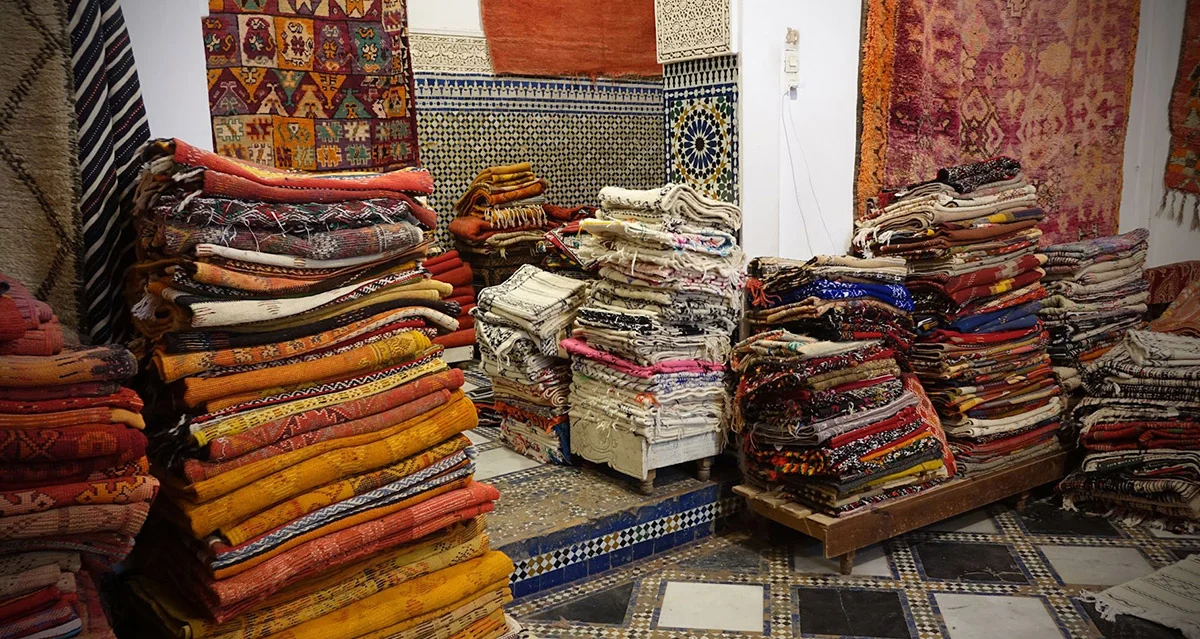
Whoever said 'Moroccan carpet' didn't mean anything! Walking through the door of a carpet merchant's shop in Fez is like walking into a firework display of colours, textures and patterns, infinitely varied depending on the origin of each carpet.
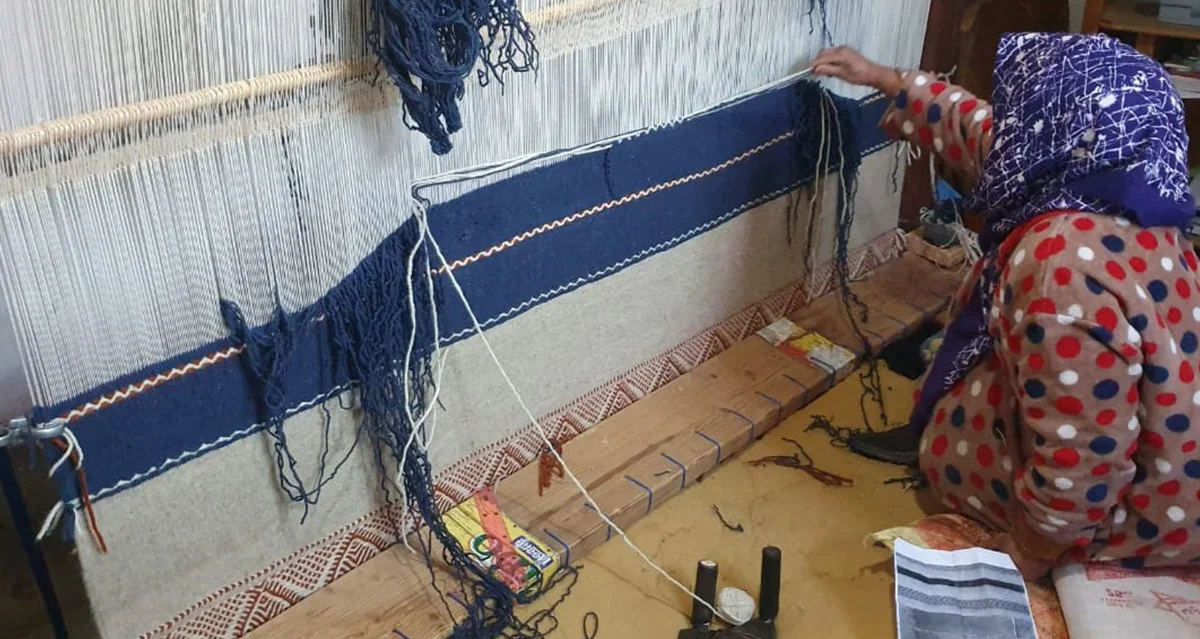
The story has the flavour of an ancient tale… Hand-woven almost exclusively by women who have been passing on this know-how since the 7th or 8th century AD, Moroccan carpets are mainly Berber carpets, made in all the rural and mountainous regions of the country.
Used as floor rugs, wall hangings, blankets, dowries, bridal finery and even shrouds, their primary function is to dress and insulate homes in winter and to provide a source of income for the most modest families.
A few guidelines for choosing your Moroccan rug
When it comes to describing the carpets, from the simplest to the most complex, that emerge from the imagination of weavers, we very often find the expression 'writing of silence'. Indeed, these woven surfaces are used by women to describe their daily lives, express their feelings and convey values.
Each motif refers to traditional symbols, the life of the tribe, nature, female intimacy, love, death, fertility, etc. Don't hesitate to ask the merchants you meet to tell you the story behind each carpet – the most passionate among them are inexhaustible.
Carpet-making techniques vary from region to region. They can be either woven or knotted. In the first case, the carpet has a smooth surface with a tight weave, like kilims. In the second, the strands of wool are attached one by one to the warp threads, then pressed together with a comb. The greater the density of knots per cm², the greater the quality and value of the carpet.
Below is a selection of the most popular types of carpet at the moment:
Azilal
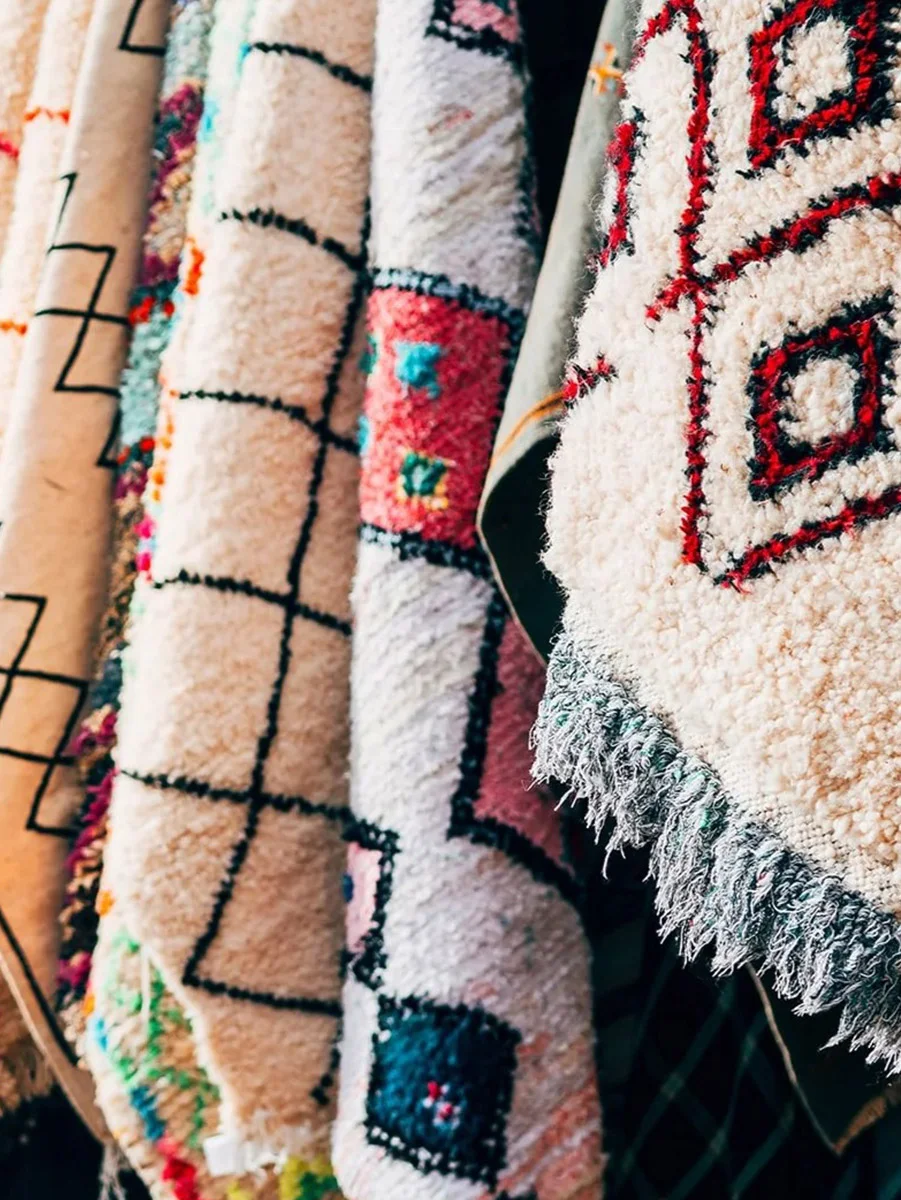
Azilal carpets are immediately recognisable by their explosion of bright colours on a mostly white background and their unique asymmetrical patterns.
Little English-Darija lexicon
Carpet: zerbiya (plural: zrabi)
Kilim: hanbel
Wool: sof
Cotton: qten
Color(s): loun (plural: alwan)
Dark: ghameq
Light: fateh
White: biyed
Blue: zraq
Black: kHel
Red: hamr
Orange: limouni
Green: khder
Yellow: sfer
Brown: Qhawi
Recommendations from Palais Faraj
Do you dream of bringing home the carpet that will enhance your interior and stay with you for a long time, but don't know where to start?
Don't hesitate to ask the Palais Faraj reception team to organize a tour of the medina for you.
Depending on your wishes and budget, an official guide will be able to point you in the direction of small traditional shops or prestigious merchants specialized in rare or antique pieces.